
Following a national trend, a Columbia congregation transitions to a voluntary membership dues structure.
Like vaudeville and typewriters, mandatory shul membership dues may become a thing of the past.
After three years of deliberations, Columbia Jewish Congregation recently replaced its mandatory dues structure with a pay-what-you-can-afford policy. A Reconstructionist congregation with approximately 260 families and individuals that holds services at The Meeting House in Columbia, CJC is following a national trend in synagogue life.
As synagogues and temples increasingly grapple with how to engage congregants and prospective members, a growing number have begun to consider a sharp change in dues policies. According to a recent study by the UJA-Federation of New York, nearly 5 percent of the nation’s Conservative, Reform and Reconstructionist synagogues have opted for voluntary dues. That number has more than doubled since 2015 when that organization first surveyed congregations about membership costs.
Jmore recently spoke with Rabbi Sonya Starr, CJC’s spiritual leader since 2000, about the policy change.
Why the change in dues policy?
We want people to feel comfortable walking into the synagogue, so our new model has a mix of financial- and values-based reasons. Transparency lets congregants know where their money is going. So this past January, we presented our budget and released our sustainability number. Now, before the fiscal year [began on] July 1, we know how much people are pledging.
As congregants become more involved and have a more active relationship with the synagogue, they have a greater connection. So we expect that in the future, they will give more to the synagogue.
How does that policy compare to your former fixed dues?
Formerly, dues for the 2016-2017 fiscal year were $1,335 for individuals, $1,644 for single-parent families and $1,990 for family memberships. Plus, we had some fundraising. People who couldn’t afford to pay those fees would petition for a dues reduction. That was embarrassing for some people.
The new pledge system takes that stumbling block out of the way. … And if we reach our budget goal through pledges, we know in advance there will be no fundraising. But if we don’t meet the budget through pledges, there will be fundraising.
What if people pledge less than what they could afford?
We are not in the business of judging how people spend their money. We often have no idea what’s going on behind closed doors. People might be unemployed, supporting other family members or needing to pay major medical expenses.
How did this policy change come to be?
For three years, we did extreme due diligence. We researched different kinds of dues structures and different sustainability models. We held classes on how Jews understand money, business and values around money and business. We offered Jewish education and secular education. The voluntary dues model kept coming up.
It became clear that people were most interested in and drawn to places where the primary concern was being involved in the synagogue and dedicated to the community. And then the money followed.
The whole congregation voted in a town meeting that led to the final decision. Even if the board had wanted to retain the old structure, the vote of the town meeting led to the voluntary dues program. If the whole congregation wasn’t behind this change, it wasn’t going to work.
How have congregants become more engaged?
Now, every life-cycle event is included in the volunteer pledge, including bar and bat mitzvahs. Year-cycle events such as High Holiday tickets also are included for members and out-of-town family members with proof of synagogue membership. People can pledge the amount of High Holiday tickets and become a member for the year.
So why would anyone buy High Holiday tickets rather than become a member for the entire year?
After people have become members, it’s up to us to involve them, call them, invite them to events, learn what they’re interested in, find out what kinds of things would be Jewishly and spiritually beneficial to them.
As congregants become more and more engaged, why would they even think about leaving? They have become part of the community.
What have been the results so far?
We learned that in the first year, other congregations that switched to voluntary dues would have a 5 to 10 percent reduction in total payments. That’s a large cultural shift, which might last for two years. Then, the dues increased to more than past totals because people became more invested in the congregation.
Now, 94 percent of the pledges are in, and those remaining are from new members. We don’t yet know the final results, but nobody has not pledged because of the voluntary dues structure. And we are also getting calls from interested potential members who have seen the new dues structure on our website.
Peter Arnold is a freelance writer based in Olney, Md.
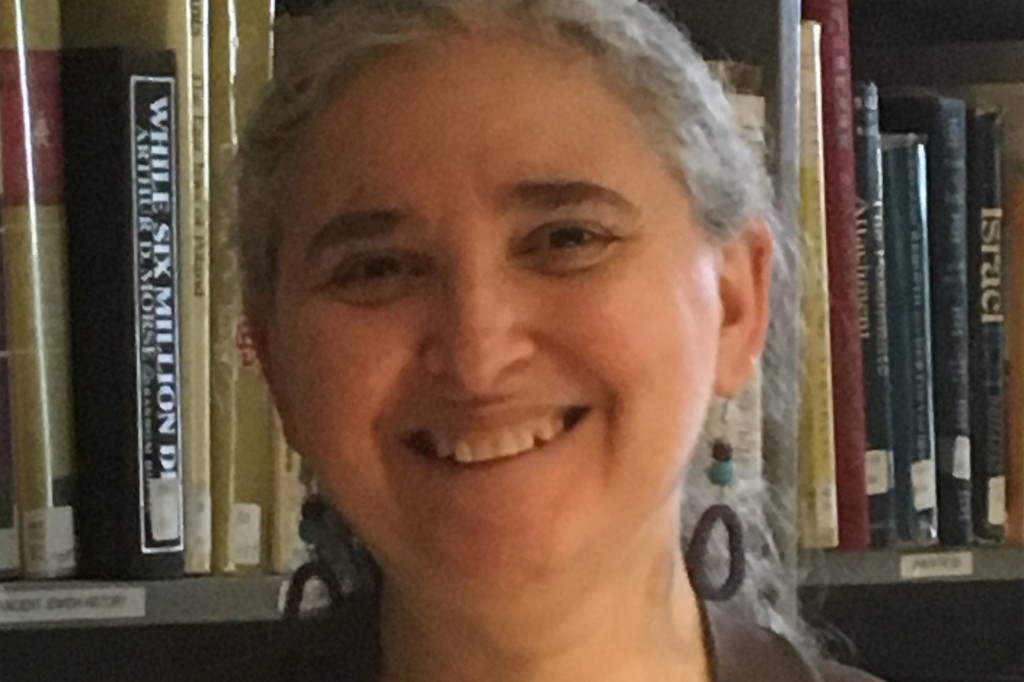
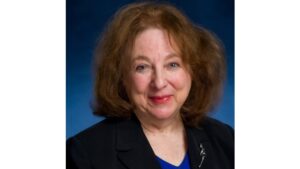
Top photo: Rabbi Sonya Starr (Photo courtesy of Columbia Jewish Congregation)
Also see: Columbia’s Jewish Community Marks a Half-Century
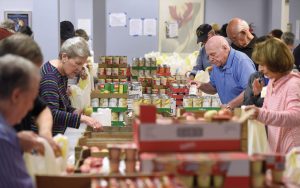
Weekend Backpacks is partnering with Heritage | MileOne Autogroup for the largest corporate volunteer engagement and donation initiative in the organization's history.
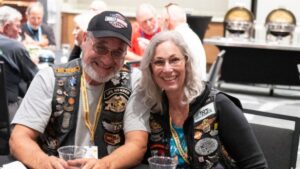
Pikesville residents David and Wendy Hefter recently joined Jewish motorcyclists from around the world to raise money for victims of the Oct. 7th terrorist attacks in Israel.
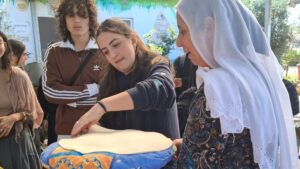
A new educational initiative helps Israel’s ethnic and religious minority communities understand their own stories and appreciate what democracy looks like in a diverse society.
The Baltimore resident taught at Johns Hopkins for five decades.