
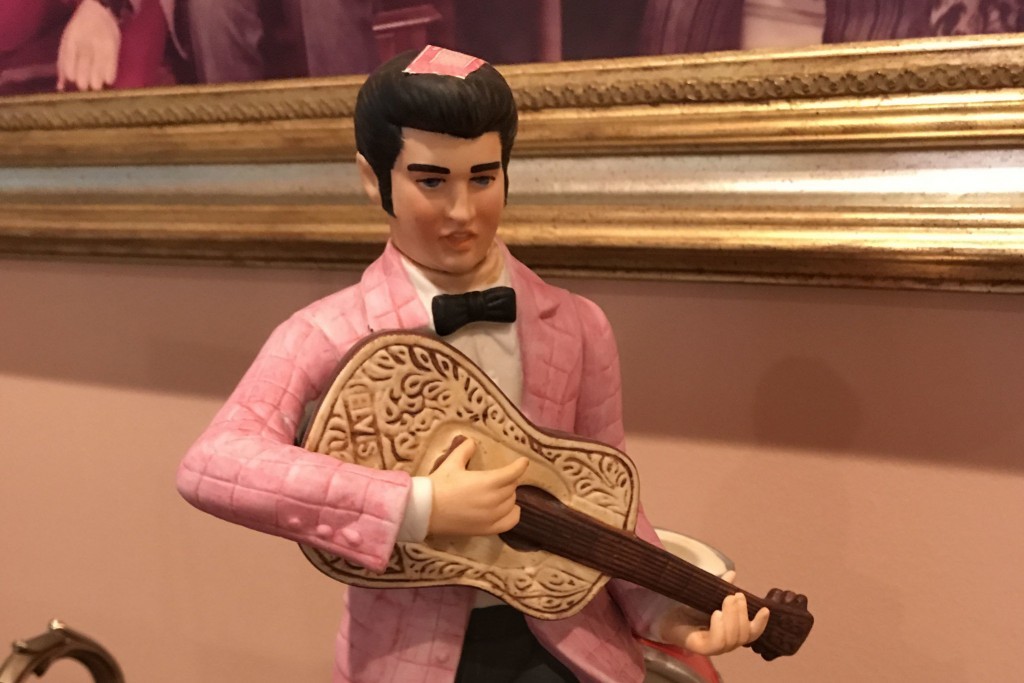
Record Store Owners & Glass Blowers
“When I first came to Memphis in 1969, I did my best to imagine the world as it must once have been…” –Peter Guralnick, Elvis scholar
The world as it must have been…
As the haunting zemiros of Shabbos harken back to double-portions of manna in the desert, those who came before us and Creation itself.
“By the rivers of Babylon, by the rivers of Babylon, there we sat down and we wept…”
Now ain’t that a blues sent by slave ship from Mesopotamia to the shores of the Father of All Waters?
Guralnick was 25 when he arrived at the confluence of the Wolf and the Mississippi in June of 1969 to hear Bukka White, Furry Lewis and Fred McDowell play the Memphis Country Blues Festival.
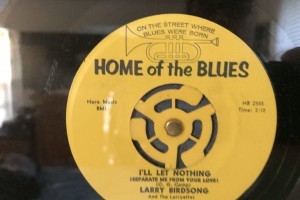
About a mile away, a grade-school kid named Barry Frager was hanging around his uncle’s Beale Street record store, now and then selling a disc by the forgotten blues greats Guralnick had come to honor, old-timers enjoying a moment on the sunny side just before putting their guitars away for the last time.
The shop was at 107 Beale St., Ruben Cherry’s fabled “Home of the Blues” which also recorded and released 45 rpms by the likes of Willie Mitchell and Jimmy Dotson on its own label.
[Don’t you wish your name was Ruben Cherry? Cool handle but not a man beloved by his customers, who never forgot the nickel Ruben had glued to the counter so he might chuckle when someone tried to swipe it.]
In the acid-blues epoch of ’69, it’s likely the store was moving more LPs by a youngster supporting his elders at the festival – Texas guitar virtuoso Johnny Winter – than music by men about to become ghosts. [As Johnny did himself in 2014.]

Barry, 55, a successful immigration attorney known to sing “Temptation Eyes” by the Grass Roots in the shower, was telling music stories just before Friday candle-lighting at his parents’ suburban home just outside of Memphis.
[Russian Jews, the Fragers have been in Memphis since the early 20th century.]
It was late July, nearly a half-century down the road from that Memphis blues festival at the city’s Overton Park Shell where the King ignited his career with his first paid concert on July 30, 1954.
[A few weeks before my visit to the Fragers, the Squirrel Nut Zippers played “the Shell.”]
Barry started talking about Creedence Clearwater Revival as his father was about to strike the match, the military veteran ignoring our blather the way my father pays no attention when my brother Victor and I discuss any music made after the Sandpipers released Guantanamera.
“You know that line from Proud Mary – ‘pumped a lot of pain down in New Orleans’”? asked Barry, one of those bright bulbs who likes to quiz people, share esoterica as though state secrets and tell folks what they should order for dinner.
[His motto, based on financial prudence: “Never order the small.”]
Yep, I said, “Right after ‘Washed a lot of plates in Memphis.’”
“Do you know what the word ‘pain’ in the song means?”
[I resisted telling him it meant having to listen to him sing in the shower.]
“What’s it mean, Barry?”
“It’s ’pane, short for propane,” he said. “It’s about a barge worker on the Mississippi. He’s pumping ’pane.”
It was like that moment in Annie Hall when Woody Allen pulls Marshall McLuhan out of thin air to tell a know-it-all that he understands nothing about his work. Sadly, I could not summon John Fogerty to tell Barry if he had properly deconstructed lyrics under debate for the past 48 years.
And it was all moot when Jerry the retired Air Force lieutenant colonel told us – a couple of 50-somethings lost in the sands of the Top 40 – it was time to light candles and cut the crap. I donned my courtesy yarmulke – the kind you pick up at Sol Levinson’s and forget to put back — while Jerry and Barry recited Hebrew I only knew in English.
“Blessed are You, Lord our God, King of the universe…”
Dinner – matzah ball soup, roasted chicken, potato kugel, a tray of some vegetable I can’t remember – was served by a woman named Joy. A Protestant believer, Joy performs an assortment of tasks at the Frager home, including assisting Jerry’s wife Natalie who was not feeling well and took her soup in a mug in bed.
“My father loved Israel,” said Joy, bringing food to the table. “He loved the Jewish people.”
To which Jerry said, “Chicken tastes like Corky’s.”
Corky’s is one of a handful of BBQ joints claiming “best” status in Memphis, not unlike the four dozen Charm City restaurants claiming “Baltimore’s Best” crab cake. The granddaddy of them all is Charlie Vergo’s Rendezvous, a basement emporium of roasted meat (lamb/beef/pork/chicken) in an alley downtown.
[It was at the Rendezvous – where I supped with Barry the night before – that I was introduced to the Frager “Never order the small” edict.]
As I ate, the face of my Baltimore friend and fellow book freak Mordechai Frager (who made the introduction to his Memphis mishpokhe) stared up at me from a laminated placemat featuring all of Jerry and Natalie’s grandchildren.
Dinner conversation included tales of Jerry doing the twist on a nightclub stage during Air Force Reserve maneuvers in Biloxi; the Nazi’s 1935 “perfect Aryan baby” photo contest won by a Jewish toddler [Hessy Levinsons Taft, still alive in New York]; and how the Fragers once met a Baltimore couple on vacation in Mexico. Jerry believes their name was Fleischmann.
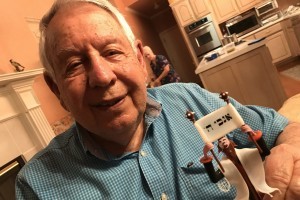
Before relating the story of the Fleischmanns, he asked Joy to go fetch a figurine from the china cabinet in the living room and be “very, very careful,” with it. When she did, Jerry showed off a small and finely wrought Jewish man made of glass. The man was holding a scroll and was wearing eyeglasses (with lenses!) that were exquisitely delicate.
“The Fleishmanns rented their basement to a glass blower who put his lab down there,” said Jerry, noting that the name of the artist – the same guy who’d made the figurine – was a Jew from Italy.
“Gianni Toso!” I said, speaking a name that hadn’t crossed my mind for 20 years. “I wrote about him once.”
Then, no doubt breaking multiple Shabbos prohibitions both biblical and rabbinical, I took out my phone, dialed up a Sunpapers story from 1995 and stood to read the tale of the Venetian glass blower who calls Baltimore home.
The eternal thread of narrative — not unlike the ribbons of molten glass from which Toso makes everything from masks to chess sets pitting 16 rabbis against 16 Catholic priests – had spun across a quarter-century and a thousand miles to connect me to a family I hadn’t known existed just a few months ago.
“Gianni Toso believes that God was the first glass blower,” I read aloud, the tiny Jewish man made of glass alongside of Jerry’s plate. “Sixty-two percent of the Earth is silica. God made Adam from the Earth. How we are alive is because God blew into the pipe.”
Read Part 1: Ralphie’s Summer Vacation: Shabbos in Memphis!
Read Part 3: A Bushel and a Peck of Tall Tales
Also see: A Talmudic Wrinkle in Time
Rafael Alvarez is the author of “Basilio Boullosa Stars in the Fountain of Highandtown.” He can be reached via orlo.leini@gmail.com
Top photo: Elvis decanter from the home of Jerry and Natalie Frager. (Photo by Macon Street Books)

A recent experience reminded Editor-in-chief Alan Feiler of why we cannot allow the antisemites to make us cower and hide.
Historical revisionism only jeopardizes the future, writes Editor-in-Chief Alan Feiler.
Jmore Editor-in-Chief Alan Feiler writes about what he learned during a recent visit to Paris.

Jmore Editor-in-Chief Alan Feiler remembers Temple Emanuel's longtime spiritual leader, who passed away earlier this week at age 91.