
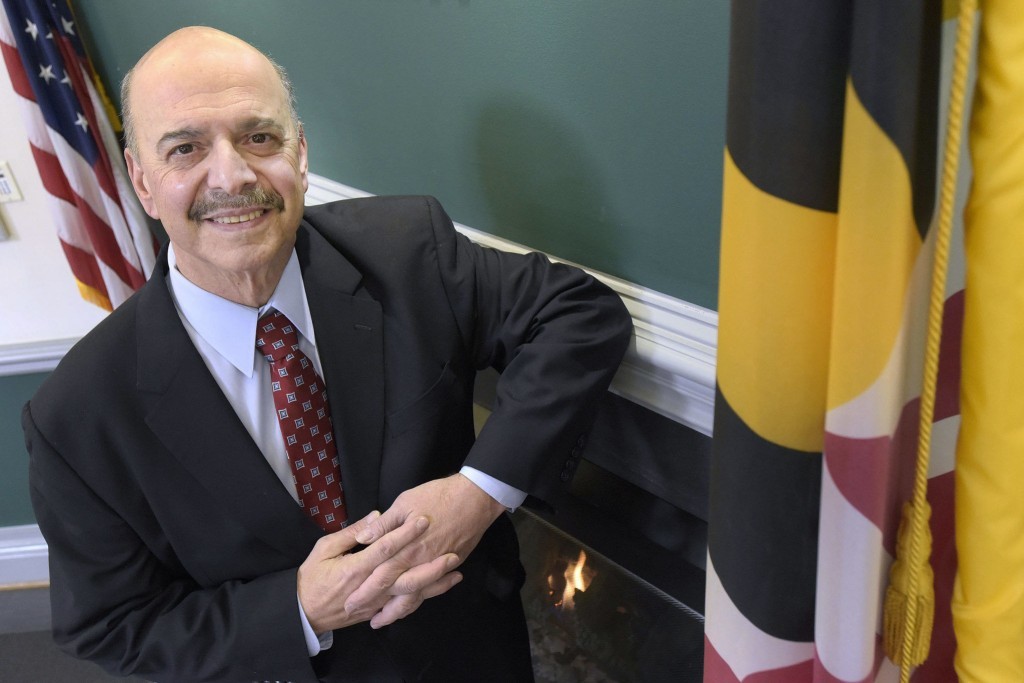
Dr. Dan K. Morhaim brings his wealth of medical experiences and expertise to the House of Delegates.
Dr. Dan K. Morhaim is an emergency room physician who over the past 35 years has treated tens of thousands of patients. Dr. Morhaim is an ER doctor at Sinai and Northwest hospitals, and he serves on the faculties of the Johns Hopkins Bloomberg School of Public Health and the University of Maryland School of Medicine.
For the past 23 years, Dr. Morhaim, a Democrat, has served as a delegate representing the 11th District in the Maryland General Assembly, where he frequently is the lead sponsor of far-reaching bills.
Jmore recently spoke with Dr. Morhaim, 68, who lives in Pikesville with his wife, Shelley. They have three adult children and two grandchildren.
Jmore: Why did you enter public service?
There were three reasons. First, so much of what I see in the emergency room is a result of issues that should have been taken case of elsewhere and earlier. Heart attacks, end-of-life care, domestic violence, mental illness … social policy changes could have better addressed these problems at their root causes.
What we’re doing to the environment also has motivated me. Years ago, I saw the need for recycling and I realized we have to connect environmental issues with the political processes.
Then there was the Gulf War. I was a member of the Maryland-Kuwait Health Care Task Force in Kuwait and Saudi Arabia. I saw feudal, repressive, misogynistic societies up close, and that made me more deeply appreciate our democracy and wanting to be more politically active.
I was thinking about health care, the environment and governing problems, and I wondered, “How can I make a difference?” I was elected in 1995 and have been reelected every four years since.
What are some of your most important accomplishments?
Take health issues, such as colon cancer screening. It was the most effective way to nip that cancer in the bud, but it wasn’t covered by insurance. That made no medical sense. So that was one among many health issues I helped to change through legislation, and these have saved thousands of lives.
Every family confronts the impending death of loved ones. I wrote a book, “The Better End,” to support them. I also did a major overhaul of our organ donation laws. Now, Maryland has one of best organ donation collection and distribution systems in the country. People still come up to me and say, “Thanks to you, I’m alive with a new heart.”
In the early 2000s, as we began using more and more electronic equipment, we also began throwing it away. Millions of tons of discarded electronics were piling up each year, but no one knew how to get rid of them responsibly. An environmental catastrophe was developing. The innovative legislation I enacted hasn’t cost taxpayers a penny because computer manufacturers pay for our program. Now, electronic recycling is available throughout Maryland, and the valuables in computers — gold, silver, copper — are recaptured while the toxins — cadmium, benzene, lead — are disposed of safely.
I’ve developed programs that have greatly increased the efficiency and transparency of state purchasing and procurements processes, saving millions of dollars while promoting businesses in our state.
Here’s one more. Do you think the Kids Wish Network, Firefighter Charitable Foundation, Cancer Fund of America, and The Veterans Fund sound like charities worthy of support? They’re not. They are among America’s worst charities. Too many Marylanders have been fleeced by charity scams. So I coordinated with the Secretary of State’s Office, where charities are registered, the Attorney General’s Office, charged with enforcement, and the Maryland nonprofit, which is interested in supporting legitimate causes, to toughen our laws.
Can you identify one important change that must occur?
Public health and safety must be improved. The “War on Drugs” is the best example. It’s a total failure, and it’s the main reason why there’s so much violence in our region.
Some drug addicts are criminals and must be handled by the criminal justice system. For others, it’s time to approach the opioid and heroin epidemic and respond to it as a health problem. Think of substance abuse as a chronic disease, with stable periods and relapses, similar to diabetes, asthma and cancer.
Let’s talk about money. “If there was no consumption, there would be no sales,” said Joaquin “El Chapo” Guzman, former Mexican drug cartel leader. “It is true that consumption, day after day, becomes bigger and bigger. So it sells and sells.”
It’s a pyramid scheme: Addiction breeds addiction because drug users need increasing amounts of drugs, so they introduce others to drugs and take a portion for themselves. I was treating one drug dealer in the ER and I asked him how much he made from drug trafficking. “$25,000 a week tax-free,” was the answer.
There are an estimated 30,000 daily opioid and heroin users in greater Baltimore. Each spends about $50 daily feeding the habit supplied by international drug cartels and overseas terrorists. That’s $1.5 million a day, $550 million a year, and that’s just the money spent to buy drugs in one region. Add in the statewide expenses to health care systems, law enforcement, prisons, businesses, insurance, education and families, and it totals billions of dollars annually in Maryland alone. Our current policy is destroying our society from the inside while shipping vast sums of money to those who would destroy us from the outside.
Imagine if 5,000 of these substance abusers got into treatment tomorrow. Overnight, the criminal justice and health care systems would be decompressed. There are not only significant dollars savings, but also harm to the rest of society is reduced because there would be fewer crimes to fuel addiction. Every time a person with substance abuse gets treatment, the spread of addiction is reduced, and so are all the related costs.
What can we do to accomplish that?
Many things. For first-time offenders with small amounts of drugs, decriminalize possession by making it a civil violation with referral to treatment. Create on-demand addiction/counseling 24/7 in hospital emergency rooms. In the ER, I learned over and over how the first arrest and conviction for possession closed doors to employment, education, housing and credit, leading to continued substance abuse addiction and crime. If there’s a second arrest, give the patient a higher fine and referral, but if there’s a third arrest, then let the criminal justice system take over.
Apply individualized treatment to each patient. There is no one-size-fits-all solution. Some substance abusers need long-term care, but others can improve with faith-based, methadone, buprenorphine or support programs, such as narcotics or alcoholics anonymous. If these don’t work in particular cases, try a different approach.
Use new methods, such as supervised consumption facilities. The Johns Hopkins Bloomberg School of Public Health has studied these methods and showed that when more people get into treatment, overdose deaths are eliminated, fewer needles are discarded, and crime rates are lowered.
We need to apply evidence-based methods like this to address the substance abuse crisis and all other public health issues.
Top photo: Del. Dan K. Morhaim: “We need to apply evidence-based methods like this to address the substance abuse crisis and all other public health issues.” (Photo by Steve Ruark)
Pete Arnold is an Olney, Md.-based freelance writer.
Stewart, a business attorney, believes trust and affordability are the county's biggest obstacles.
The County Councilman from the 2nd District feels that transit-oriented developments can help meet pressing priorities.

The former Colt, who passed away on May 25 at age 93, achieved immortality during a cold December day in 1958, writes Michael Olesker.

The Jerusalem Orchestra East & West, which arranged the program for young musicians, blends Western orchestral music with Middle Eastern traditions.