
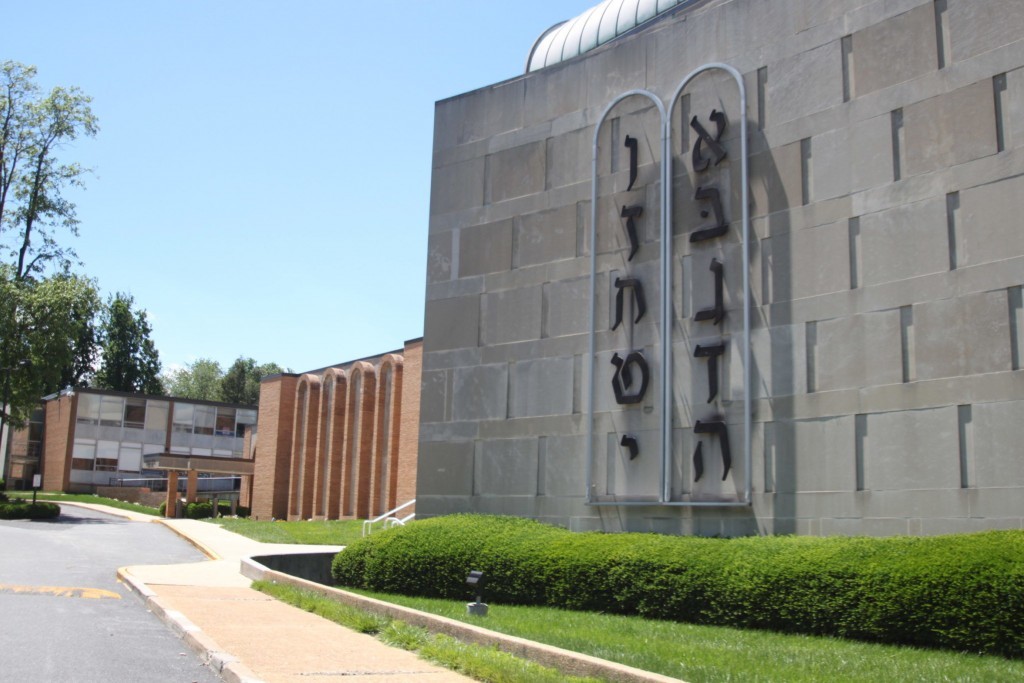
Which news is more unsettling — the original report from nearly a year ago that Har Sinai Congregation and Temple Oheb Shalom were considering a congregational marriage of convenience, or the latest news that the deliberations have been called off?
The original report seemed to validate some previously whispered notions about the shrinking of Baltimore’s Jewish population – or at least that portion of Jews who belong to a synagogue or temple. But the latest story, first reported Aug. 7 on jmoreliving.com, that they’ve decided to “cease exploration of a merger,” seems an added, troubling element for these two historic Reform institutions.
For decades, ever since the post-war heightening of religious consciousness in America, each of these synagogues stood proudly along upper Park Heights Avenue. And their roots went far deeper into Baltimore’s religious soil.
Oheb Shalom goes back 165 years; Har Sinai, 176 years old, is the oldest continuously Reform congregation in America.
If these two synagogues were feeling vulnerable enough, and if their grand buildings and campuses were empty enough to cause such talks, what does that tell us about the state of Baltimore’s organized Jewish community – and America’s?
As Jmore reports, Oheb Shalom now has about 625 families. Har Sinai has approximately 260. There was a time when these two institutions had Hebrew schools that seemed almost that large, and their Shabbat services were overflowing.
All talk of mergers seems a reflection of the state of modern American Jewry.
Five years ago, the Pew Research Center released its “Portrait of Jewish Americans.” Among the findings were that the nation’s Reform/Conservative community will likely drop from around 3.5 million adherents to about 1.5 million over the length of this century.
And within about 40 years, there will be more Orthodox than Reform and Conservative Jews combined (even though, as The Forward reported earlier this summer, “The number of Jews raised in Orthodox households who eventually leave Orthodoxy is rising in proportion to that community’s exploding population.”)
Analysis this year out of Yale University and Hebrew Union College offers some glimpses into the future. Researchers say less than two-thirds of Jews who have two parents who identify as either Reform or Conservative end up staying with either denomination. About one-tenth join Orthodoxy, while 22 percent become Jews of “no denomination.”
As The Forward reported, “If current trends continue, the Reform and Conservative movements will soon see a significant collapse in what the researchers term the ‘leadership age-group,’ people aged 30-69 who are most likely to serve as vital community-sustaining lay leaders and donors.”
All of this reflects on those merger talks between Har Sinai and Oheb Shalom – and the breakdown of those talks.
 A former Baltimore Sun columnist and WJZ-TV commentator, Michael Olesker is the author of six books. His most recent, “Front Stoops in the Fifties: Baltimore Legends Come of Age,” has just been re-issued in paperback by the Johns Hopkins University Press.
Also see:
- Har Sinai Calls Off Merger Exploration with Oheb Shalom
- Oheb Shalom Congregants React to Rabbi Fink’s Suspension
- Har Sinai, Oheb Shalom to Explore Merger
- Winands Road Shul to Merge with Beth Tfiloh
Attorney and Barry Levinson confidante Donald Saiontz left his mark on the world, writes Michael Olesker.
When we create a world with a warm and loving connection, even when someone beloved is gone, that relationship is carried on, writes Pamela R. Weissman.

The Orioles this season have proven that money can't buy happiness, writes Michael Olesker.

A recent experience reminded Editor-in-chief Alan Feiler of why we cannot allow the antisemites to make us cower and hide.