
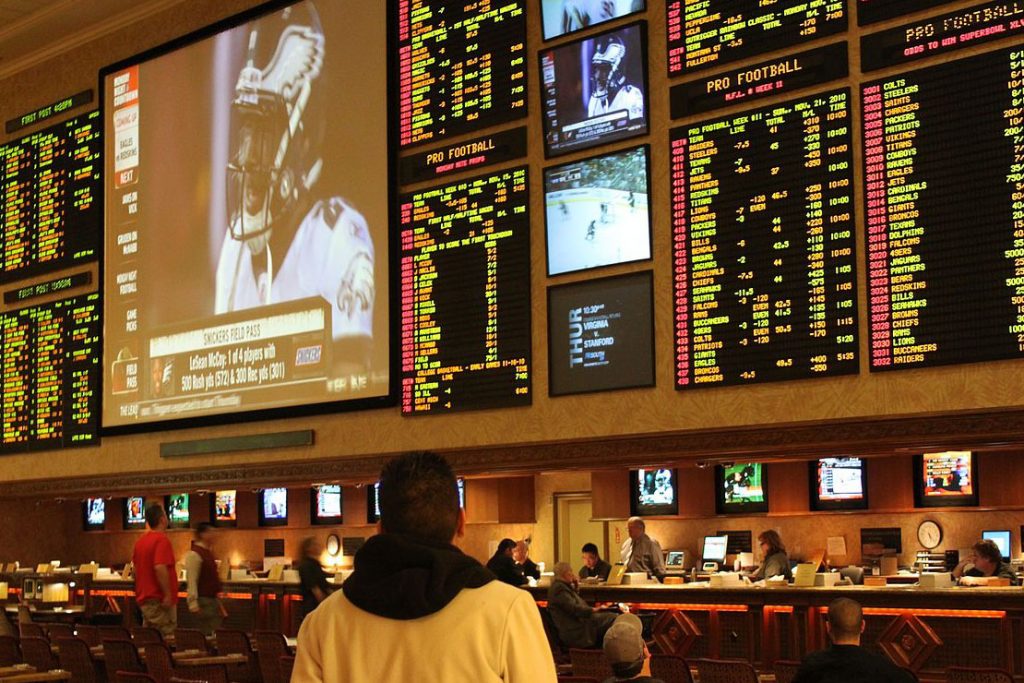
No sooner had the Maryland General Assembly opened for its annual 90-day journey into self-importance than the whispers could be heard around the statehouse: What about gambling?
Never mind already-existing lotteries and slot machines and casinos, this time it’s legalized sports betting they’re talking about. This is both a measure of how much governments have come to rely on gambling to balance their budgets, and a barometer of how far we’ve come as a culture.
Time was, municipalities used to rely on the mass arrest of gamblers – and the ensuing fines – to help pay the bills. Gambling was regarded as both a crime and an act of immorality.
“Gambling’s a sin,” we were told by political and religious leaders – except, somehow, for church bingo games.
We had several generations of men around here whose names became the stuff of headlines mainly because they made a living taking bets on the old three-digit street number. Think Julius (Lord) Salsbury and Phillip (Pacey) Silbert, think William (Little Willie) Adams and Robert (Fifi) London.
All pre-dated the Maryland State Lottery, and all had fine Runyonesque nicknames attached to them as they became local incarnations straight out of “Guys and Dolls.”
In the post-war years, Baltimore police would arrest so many suspected gamblers that Criminal Court judges regularly set aside entire days to hear nothing but cases involving street-number bets and horse race wagers and crap games and even pinball machine payoffs.
But, once the state belatedly realized there was serious money to be made on such business, and once the religious institutions started losing some of their political clout, we then had the creation of the government-run lottery games, and the numerous variations leading to our current casino operations.
And now some of our government leaders want to give us legalized sports betting, which is already taking hold in various locales around the country, including neighboring Delaware and Pennsylvania. It’s likely coming to Washington, D.C., as well. The D.C. Council approved it last month.
We’re talking about betting on football, basketball, baseball and other sports, many of which already thrive under the table. Such gambling would now be government-approved, and government-run.
In Annapolis, there’s talk of bypassing any voters’ mixed feelings on this by placing sports betting under the already-existing lottery and gaming bureaucracy.
If there seems a certain inevitability about this, it raises a subsidiary question: Where would such gambling take place?
Here’s a proposal: Pimlico Race Course. Because, if there’s an inevitability about anything, it’s that Pimlico in its current state is not long for this world. The track needs a few hundred million bucks in rehab, which nobody wants to spend, and the Preakness Stakes are likely headed elsewhere.
This would turn Old Hilltop into a shell – but a perfect shell for a big sports gambling gathering place. And, if the deep thinkers in Annapolis are serious about this new endeavor, and they don’t consider the possibility of Pimlico, then they’re just not paying attention.

Cruel, inappropriate, egomanical, outrageous and bullying are all attributes that pass for presidential these days, writes Michael Olesker.

Commemorations of the Holocaust must transcend the past to include concerns about the present and future, writes Menachem Z. Rosensaft.

Someone needed to tell Donald Trump that his appearance at a UFC fight over the weekend was not a good look, writes Michael Olesker.