
Hostinga Passover seder recently in thenorthern Ugandan city of Gulu taught me two important things. First, it is crucial to add matzoh balls to soup just a half-hour before serving; otherwise,they will disintegrate into something more like matzoh mush.
Second— and more importantly — home canbe found thousands of miles away from the places most familiar to you. The requirementsare simply a table brimming with good food, a blend of old and new traditions,and four cups of wine.
Icried most of the day leading up to Passover. My roommate and I had barely sleptthe night before. Our power was turned off, as frequently happens. I sat on thefloor as my roommate cut apart and marinated meat for the coming seder meal, workingby flashlight, the task slow and laborious.
Midnightstretched into early morning. In daylight, exhaustion morphed into ahomesickness I had not felt since my parents shipped me off to Jewish summercamp when I was 12.
Passoverhas always been my favorite holiday. My uncle and father took turns leadingraucous seders full of special melodies and impassioned debates. Cousins laidbets on which of the grown-ups would fight first. We squabbled over who wouldget to be the “Wicked Son” during the story of the Four Children, and excitedlyhunted for the afikomen even after exceedingb’nai mitzvah age.
Therewere also quiet, contemplative moments, those spaces to mourn relatives lostand tell stories that became family lore.
InGulu, my work has been difficult. Starting out as a freelance correspondent, Ispent my days investigating war crimes and human rights abuses, loneliness andenervation constant.
Ilonged for the seders of my youth, and the warmth and comfort that accompaniedthem.
AsI walked between market stalls searching for a substitute for bitter herbs, bitternessrose in my throat. Months ago, we had decided to host a seder, combining myroommate’s Easter traditions with my own Jewish upbringing. Friends of variousreligious backgrounds were invited, but I was to be the only Jew.
Now,the task seemed weighty and difficult. I selected a bunch of wilted corianderand wondered to myself if I could bring my family’s rituals to Uganda.
Googling andOvercoming
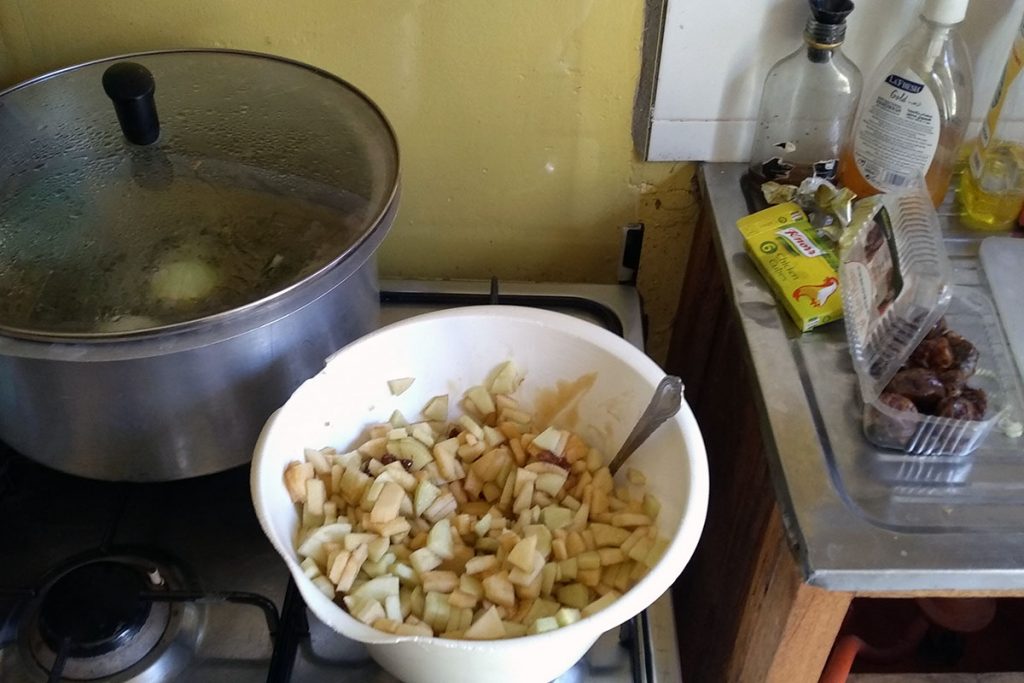
Inthe afternoon, we peeled and cut apples for charoset,the bright skins strewn like party streamers across the kitchen. My roommate mixedflour and water for matzoh. I tended the soup, carefully shaping matzoh ballsand adding spice to the stock.
Weplayed Passover songs from my iPhone, electricity blessedly returned. Dogstwisted around our ankles, eating scraps from the floor.
Ithought of a photograph I keep. It shows my aunt and grandmother preparing for aseder in 1996. They are cutting onions with their eyes behind goggles toprevent tears, childhood pets certainly hidden from view beneath the table.
Aswe cooked, a bit of home retuned to Gulu, too.
Wewere still working, stressed and sweaty, when a collection of guests arrived atthe table. They carried wine and pink bougainvillea. My roommate assembled the sederplate, and I stuck that old photo to a vase of flowers in the center of the table.
Passoverbegan.
Relyingon a collection of haggadot and quickGoogle searches, we completed each ritual with care, sometimes cycling backwardto correct mistakes in the order.
Ourguests asked each of the Four Questions, promising to add a fifth over the sedermeal. I blessed wine and candles in Hebrew, taught a song about the FourChildren to the tune of “My Darling Clementine,” and snuck off to hide the afikomen.

Wepoured water over our hands from a bucket, explaining Jewish and Christianbeliefs about hand and foot washing. We took turns reading sections of thePassover story in the Haggadah, contemplating universal themes of exodus and liberation.We dropped wine on to our plates for the 10 Plagues. We sang “Dayenu,”belting out the chorus with joy and banging on the table.
This would beenough, I thought. This would be enough.
Wealso ate Hillel sandwiches with charosetand a bitter herb of coriander, and shared the matzoh mush soup. We dug into ahearty dinner, along with a “fifth question” about social justice andliberation.
Iplayed the hymn “We Shall Overcome” from a small speaker, and friends added songsabout freedom by Bob Dylan.
There were more cups of wine, each blessed, and a wild afikomen search. My roommate led the Hallel portion of the service. As with my family seders, there were quiet moments, too. We set intentions for Passover and Easter week, as well as for a secular life in humanitarian work and activism. We said Kaddish for our loved ones lost, and read an Allen Ginsberg poem. We shared in gratitude and thankfulness.
Ourseder concluded well after midnight, with the door open for Elijah. This time,I substituted “Next year in Jerusalem”for “Next year in Gulu.”
Together,we said, “Next year may we all live in peace.”
Friendsmigrated to the porch, the stars bright in the sky. Someone brought out aguitar and we all played and sang together, finishing what was left of thewine.
Afterward,I lay below my mosquito net, full of gratitude. I felt rooted in communityhalfway around the world, and grounded in a blend of beliefs and experiences.

WithPassover, I was at last truly at home in Gulu, and eager to continue sharingand learning.
Sophia Neiman is a freelance writer from Baltimore who currently lives and works in Uganda.
Commemorations of the Holocaust must transcend the past to include concerns about the present and future, writes Menachem Z. Rosensaft.

Someone needed to tell Donald Trump that his appearance at a UFC fight over the weekend was not a good look, writes Michael Olesker.
Journalists bear a responsibility to go beyond the headlines and social media posts to understand the past and present, writes New York University student Lucia Alonso.
The Trump administration's invoking of religion is reminiscent of the words and actions of one of history's most brutal Crusaders, writes Michael Olesker.