
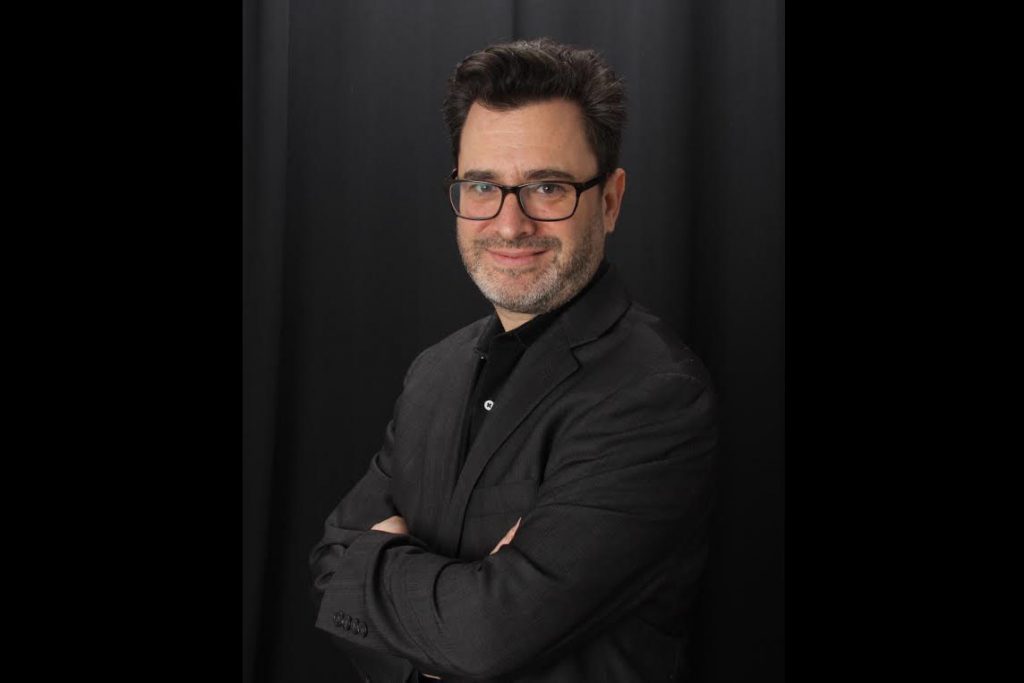
Can Judaism exist without espousing a belief in a higherpower? Paul Golin believes it can.
Golin, executive director of the Society for Humanistic Judaism, will speak May 19 at 2:30 p.m. at the Pikesville branch of the Baltimore County Public Library, 1301 Reisterstown Road. His free talk titled “No God and Still Jewish — How Does That Work?” will be hosted by the Baltimore Jewish Cultural Chavurah.
This year, the Farmington Hills, Mich.-based SHJ celebratesits 50th anniversary. The nontheistic Jewish movement – which has 28 chaptersin North America — combines a focus on Jewish identity and culture with ahuman-centered approach to life.
Jmore recentlyspoke with Golin, co-author of “How to Raise Jewish Children … Even when You’reNot Jewish Yourself” (Alef Design Group) and other books.
How can a Jewish movement notprofess a belief in God?
The Pew Research Survey of U.S. Jews in 2013 found that only 34 percent of respondents who consider themselves Jewish believe in God with certainty, compared with 69 percent of U.S. adults. Judaism is much more than a religion. Rabbi Mordecai Kaplan [co-founder of Reconstructionist Judaism] said Judaism is a civilization. Rabbi Sherwin Wine, who founded the Society for Humanistic Judaism in 1969, considered Judaism a culture where religion is just one piece.
What are your movement’sbeliefs?
HumanisticJudaism is a nontheistic religion, similar to ethical culture. We are organized along religious lines withcongregations and rabbis, and many of our communities have religious schoolsfor children on Sundays. We celebrate Jewish holidays, including the High Holidays,Passover and Chanukah for free in most of our communities. We also celebratelife cycle events. For example, we derive meaning from bar and bat mitzvahs asa cultural coming of age, not a religious coming of age.
Rabbis?
We have ordained more than 50 rabbis in the U.S. and Israel who have come fromthe Reform movement and, since 1985, have been ordained by the InternationalInstitute for Secular Jewish Humanism. We’re very active in Israel, where ourrabbis conduct secular ceremonies that are not recognized by the Israeligovernment.
Nothing in our liturgy is anti-religious. If you believe in God, you can join us. But our belief is not in the God of the Bible, who is supernatural.
Does Humanistic Judaism embracethe Torah?
Wethink the Torah is a very important book in Jewish history, and we’ve overlaid itwith a humanistic philosophy as contrasted with a supernatural power. Webelieve that humans decide what is right and what is wrong. We can recognize where our ancestors got thosehuman decisions right and where they got them wrong. I like having a connectionin the long chain with my ancestors. There’s lots in the Jewish ethic to bereally proud of, but there’s also some disturbing stuff.
Such as?
Religious fundamentalism is using our source text to discriminate against the gay community. We don’t do that. Jews supposedly came out of slavery, but the writers of the Torah did not abolish slavery in response. We also ask important questions. For instance, if you believe in God, how could the Holocaust have happened?
Who is a Jew, from SHJviewpoint?
Wehave the broadest definition of who is a Jew. If you identify with the historyand culture of Judaism and call yourself a Jew, you are a Jew. We don’t ask people to provide theirbonafides. It’s about meaning. We have no boundaries to participation byanybody, no requirements such as minyans.
Is your movement growing?
Weand many other Jewish and Christian movements are seeing a decline in membership.But we are benefiting from coming together as a community. We are a cause that makes lives betterbecause we help people find meaning and connection, knowing where they fit intothe human story, feeling connected during life cycle events.
What can Humanistic Judaismpass down to future generations?
In some families, we are in our third and fourth generations of HumanisticJudaism. I’m a third-generation atheist,but I consider myself Jewish. Humanistic Judaism is a philosophy. We ask, “Whatis our purpose, what is the meaning of our lives?” There is no hereafter. Thisis it. We must right what is wrong. Rather than leave Judaism behindcompletely, we enable people to be Jewish in a community.
For information, call410-493-2473 or visit baltimoresecularjews@gmail.com.
Peter Arnold is an Olney,Md.-based freelance writer.
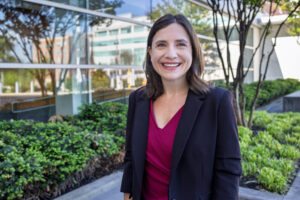
Leslie Simmons, executive vice president and chief operating officer of LifeBridge Health, will serve as interim president of Sinai and Grace Medical while a national search is conducted for Shlossman’s successor.
Schwab currently serves as president of Cumberland's historic B'er Chayim Congregation.
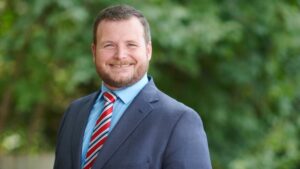
A former U. S. Marine, Pat Young has served as a Baltimore County Council member representing District 1 since 2022.
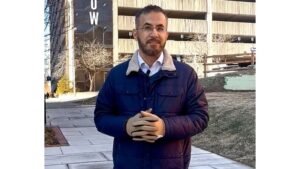
Mansoor Shams is known for carrying around a sign proclaiming, “I’m a Muslim and a U.S. Marine. Ask anything.” Now the Baltimore County Department of Recreation and Parks community engagement and outreach officer is running for Baltimore County Executive.