

The second installment of a three-part series
Sixty-five years ago this week, just minutes after the U.S.Supreme Court outlawed legalized race discrimination in America’s publicschools, Thurgood Marshall stood with reporters in a courthouse corridor andtried to find words to fit his emotions.
“The greatest victory we ever had,” he said.
But the words came up short. And Marshall – whose legalskills had just helped overturn generations of segregated American schooling –knew it. There were, in fact, no adequate words to capture the historic powerof the moment.
But Marshall looked around him, and he spotted a littlewhite boy, and he picked up the child. Here was the symbolism of the moment. Andthis dignified man, this future U.S. Supreme Court justice, began running upand down the hallway of the stately courthouse with this tyke on his shoulders,until the little boy burst into a smile.
One white smile, 150 million more to go.
Even now, 65 years later.
We talk a more conciliatory game now than we did in thedecades before May 17, 1954, when Marshall helped author the Brown v. Board ofEducation integration decision. But talk doesn’t disguise American ambivalence.
We’re still trying to figure out the comfort zones of race.
In the city of Baltimore, school integration commenced when doorswere opened the following fall after Brown. In the surrounding counties,officials stalled and stalled. Some counties took years to obey the highcourt’s ruling.
Such decisions helped set off the greatest suburban exodusin American history. Baltimore was roughly three-quarters white in 1954; today,it’s more than 60 percent black. And a city population that once approached onemillion now barely tops 600,000.
As city schools began integrating in the 1950s and ‘60s butcounties balked, many white parents took this as a signal: Head for suburbia, wherekids can get schooling without having to deal with issues of race.
According to a 2017 study, “Maryland School Enrollment byRace, Ethnicity and Gender,” the city’s public schools are now 8 percent white,10 percent Hispanic and nearly 80 percent black.
The same study said Baltimore County’s white population istwice as large as its black population – but the public schools are now roughly39 percent each (and 10 percent Latino, 7 percent Asian.
Such numbers are reflected around the country. A new reportfrom UCLA and Penn State, outlining racial changes since the Brown decision,says whites now count for less than half of the nation’s public schoolstudents.
And the percentage of intensely segregated schools – thosewhere less than 10 percent of the student body is white – tripled over the past30 years, from 6 to 18 percent.
This is not what Thurgood Marshall had in mind, nor was itthe vision of the U.S. Supreme Court 65 years ago this week.
Does it matter?
On Friday: Part three on school integration

A former Baltimore Sun columnist and WJZ-TV commentator, Michael Olesker is the author of six books. His most recent, “Front Stoops in the Fifties: Baltimore Legends Come of Age,” was reissued in paperback by the Johns Hopkins University Press.
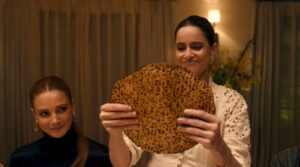
At a time when many Jews fear appearing Jewish in public, seeing Judaism depicted correctly onscreen is reassuring, writes Jewish content creator Rabbi Yael Buechler.

Cruel, inappropriate, egomanical, outrageous and bullying are all attributes that pass for presidential these days, writes Michael Olesker.
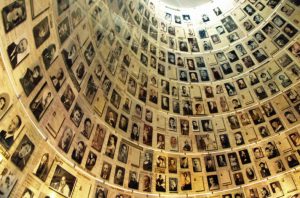
Commemorations of the Holocaust must transcend the past to include concerns about the present and future, writes Menachem Z. Rosensaft.