
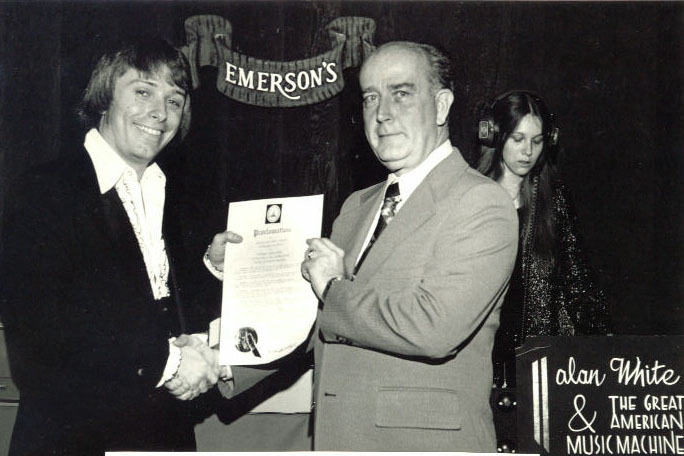
The years go by, and the late William Donald Schaeferremains the ultimate measure of all mayors of Baltimore. It’s been 32 yearssince he left City Hall, but the “Do It Now” cry remains indelible – andelusive.
Have you been to Harborplace lately? The two pavilions areghostly shadows of their former selves, and nobody in power seems to care. WhenSchaefer was mayor, it was considered the heart of the city’s psychological andeconomic renaissance.
And yet …
On the big day it was opened, Schaefer said a few words andquickly retreated to his office, where his aide, Lainy Lebow-Sachs, found him.He was already buried in his work, while many tens of thousands were justgetting started celebrating the grand opening.
Lebow-Sachs asked, “What are you doing here? You should beout taking bows.”
“Nope,” Schaefer said, barely looking up. “That’s oldbusiness now. Got new work to do.”
Have you seen the garbage strewn around major areas of thecity? This was the essence of Schaefer – cleaning up all trash from streets andschoolyards, filling every pothole, removing every abandoned car from thestreets.
He’d call some bureaucratic chief and holler, “I just saw anabandoned car. Get it off the street.”
“Where is it?” the poor chief would reply.
“That’s for you to find out,” Schaefer would say. If theworks crews looked hard enough, they might find a bunch of them out there, andremove them all.
Schaefer saw the city as a reflection of himself. Sully it,and you sullied him. Insult the city, and you endured Schaefer’s wrath.
You think Baltimore’s got problems today? Schaefer inherited a city that had lost all heart. It was1971, when all of us were still living in the shadow of the ’68 riots.
But Schaefer did something really smart. He lied like hell,and then he kept telling the same lie: “Baltimore is Best,” he lied. Thatbecame the city’s slogan, a kind of municipal mantra: Baltimore is Best. It was on all the bumper stickers and citybenches. You say something long enough, and insistently enough, and people tostart to believe it. And he built a rebirth around that slogan.
He championed the annual City Fairs and all those ethnicfestivals we used to have. Every crowd carried an implicit, unspoken message: We’re mixing with each other. We weren’tjust tolerating each other, we were celebrating some of our differences,learning to live with each other as we never had before.
Part of the magic was Schaefer surrounding himself with really smart people, like Bob Embry andMark Joseph, and Wally Orlinsky and Clarence “Du” Burns, and Joan Bereska andJanet Hoffman, and Sandy Hillman and Hope Quackenbush.
But Schaefer was a one-man powerhouse when he needed to be. Onetime, he went to Washington to meet with Richard Nixon’s HUD secretary, GeorgeRomney. Schaefer wanted federal development money. Romney tried to stiff him.
“You don’t understand what’s going on in cities,” Schaefercried. Romney, this straight-laced patrician, couldn’t believe his ears. Who onearth would speak this way to a presidential cabinet member? Romney triedyelling back. So Schaefer upped the ante, and the decibels.
“You sit here and pretend to care,” he hollered. He wasn’tjust the mayor then. He was this royally ticked-off crazy man, up from thestreets of scruffy Bawlamer, tired ofhearing excuses from heartless powerbrokers controlling all the big money. Bythe end of it, Schaefer and Romney were calling each other nasty names.
Driving back to Baltimore, Schaefer was certain he’d blownit, that Romney would withhold all federal funds as personal slight. The wholeCity Hall contingent sank into a funk. But Romney understood the passion behindSchaefer’s bellowing – and he changed his mind on everything, and the city gotmoney for several big development projects.
“The best days,” Schaefer said toward the end of his life, “wasbeing mayor.” We sat in a little room as he reflected. “Only time I reallyenjoyed myself. Because you could help everybody, and everybody knew you. Youwent into the neighborhoods and saw the things being accomplished. You madepeople feel better about themselves.”
The years go by, and he’s still the ultimate measure of allmayors. Was he annoying, was he petulant, was intemperate? Yes, yes and yes. And hewas the best we ever had, wasn’t he?

A former Baltimore Sun columnist and WJZ-TV commentator, Michael Olesker is the author of six books, most recently “Front Stoops in the Fifties: Baltimore Legends Come of Age” (Johns Hopkins University Press).

Cruel, inappropriate, egomanical, outrageous and bullying are all attributes that pass for presidential these days, writes Michael Olesker.

Commemorations of the Holocaust must transcend the past to include concerns about the present and future, writes Menachem Z. Rosensaft.

Someone needed to tell Donald Trump that his appearance at a UFC fight over the weekend was not a good look, writes Michael Olesker.