
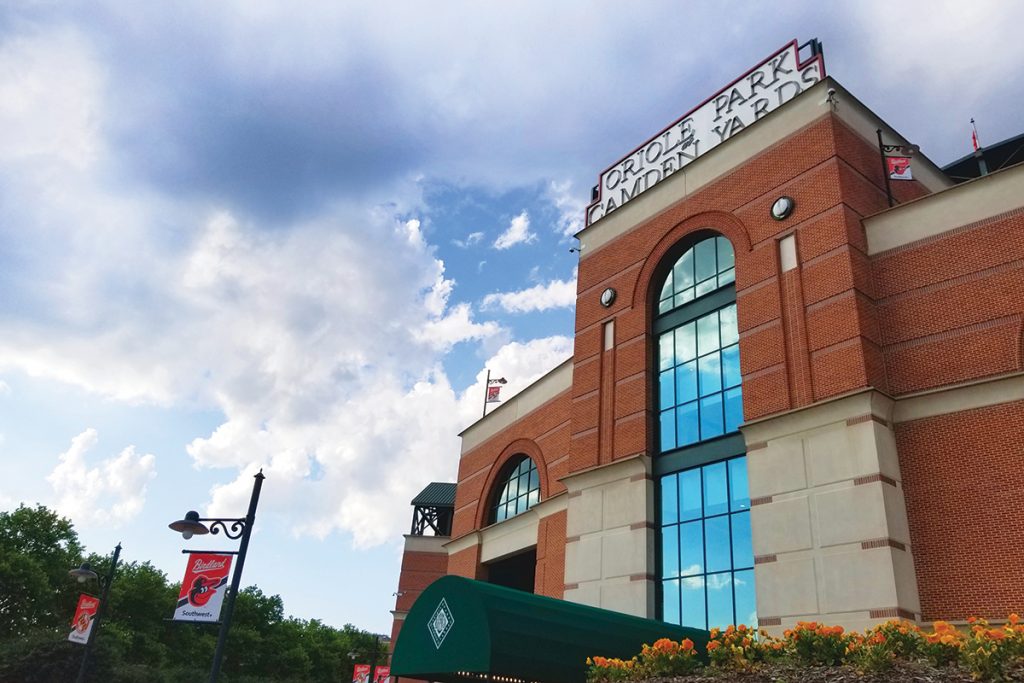
The Baltimore Orioles will play baseball again one day.
But it won’t be tomorrow.
They were supposed to open their 2020 season on Thursday,Mar. 26. It would have been the earliest start in the club’s history, whichgoes back two-thirds of a century.
Now, it’ll be the latest start by far.
If it arrives at all this year.
The nation grapples with the coronavirus pandemic, and baseball’sbeen postponed until some sunlit day not yet determined. In the same week we’rereminded of baseball’s suspension, we learn that the 2020 Tokyo Olympics havebeen postponed until next year.
Baseball’s opening depends on the ongoing contagion. Weawait a time when we’ll all be allowed to sit next to anyone at all, Bawlamer pal or boisterous New Yawk Yankee fan, without worryingwe’re swapping some potentially deadly germs.
The irony is, as we sit in our enforced isolation and fightoff loneliness, we need the company of others more than ever.
That’s what we miss most about sports. It offers not only thegames, but the companionship. We go to the ballpark as part of a tribe,something bigger than ourselves, something that tells us we have things incommon with people we don’t even know.
In Baltimore, we’re great ones for our municipal gatherings,ballgames and otherwise. You can go back years and years for the evidence. Wefeed off each other’s energy.
Remember the Baltimore City Fairs?
They started in the shadow of the 1968 riots. Many said thecity was committing suicide by holding the first one. They said fighting wouldbreak out, that racial bitterness left over from ’68 would resurface.
Instead, hundreds of thousands of people flooded downtownfor a weekend of rediscovery. They came from every neighborhood, city andsuburban. Many hadn’t been downtown in years.
And then, something truly wonderful happened that weekend. Aviolent storm, which blew over scores of neighborhood exhibits. And whathappened? People from different communities, and different backgrounds, instinctivelyreached out to help each other.
It was the beginning of the great Baltimore renaissance.
Think of all the ethnic festivals that followed, andneighborhood festivals, and gatherings with racial and religious themes, andthe wonderful Artscape festivals. Each one offered an excuse to get out of thehouse and mix a little, with each reinforcing the sense of community.
Ballgames do the same for us. Think of the devastation whenthe Colts left, and the rejuvenation brought by the Ravens.
We need those games not only for the fun of watchingathletic excellence but the pleasure of sitting with thousands of people fromour municipal tribe. We need that sense of being part of something bigger thanourselves.
Baseball will come back one day, not tomorrow. But it’ll bea great day, symbolizing not only the end of an awful plague but the reunion ofthousands of strangers who make each other feel like old friends.

A former Baltimore Sun columnist and WJZ-TV commentator, Michael Olesker is the author of six books. His most recent, “Front Stoops in the Fifties: Baltimore Legends Come of Age,” has just been reissued in paperback by the Johns Hopkins University Press.

Cruel, inappropriate, egomanical, outrageous and bullying are all attributes that pass for presidential these days, writes Michael Olesker.

Commemorations of the Holocaust must transcend the past to include concerns about the present and future, writes Menachem Z. Rosensaft.

Someone needed to tell Donald Trump that his appearance at a UFC fight over the weekend was not a good look, writes Michael Olesker.