
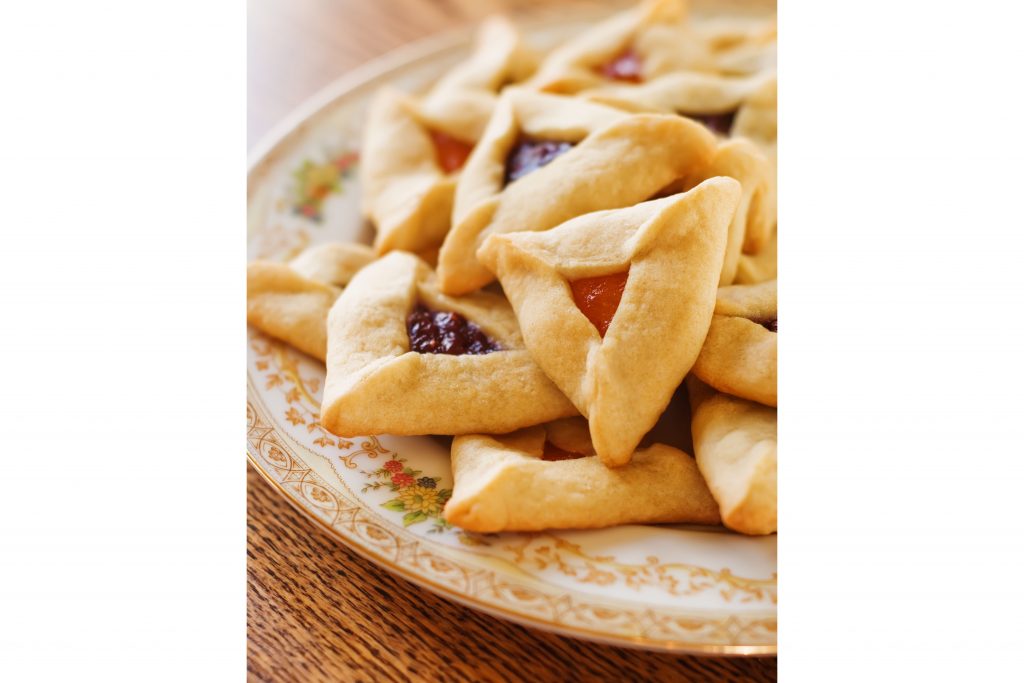

Gluten-Free Hamantashen
Ingredients
Filling
- 2 cups water
- 1 cup poppy seed (or other filling of choice)
- 1/3 cup raisins
- 1 small orange finely grated zest
- 1/2 cup orange juice
- 1/4 cup honey
- 1/2 cup granulated sugar
- 1/4 tsp. ground cinnamon
- 1/8 tsp. salt
- 1 egg beaten lightly
- 1/3 cup almonds chopped, toasted
Ingredients for gluten-free hamantashen cookie dough
- 3/4 cup butter softened (or, use Earth Balance for dairy-free)
- 2/3 cup granulated sugar
- 1/4 tsp. salt
- 1 tsp. vanilla extract
- 2 cups gluten-free coconut flour from Pereg Natural Foods
- 1 cup gluten-free almond flour from Pereg Natural Foods
- 1/4 cup orange juice
- 1 egg yolk beaten with 1 tbs. milk (or dairy-free milk substitute) for glaze
Instructions
- Preheat oven to 325 degrees Fahrenheit.
- Combine all the ingredients together, except for the filling ingredients, using a food processor.
- Transfer the dough to a bowl and start adding the coconut flour while kneading the dough until you get a play-dough consistency.
- Put the dough between 2 pieces of parchment paper and flatten the dough with a rolling-pin.
- Make circles using a cookie cutter about 5-inches wide
- Fill center of each cookie circle with filling mix and squeeze corners to make triangle
- Refrigerate for 15 minutes before baking about 20 minutes or check to see that bottom does not burn. Take out of oven to cool. Taste and enjoy.
Notes
Tips When Using Gluten-Free Flour
Buy or make a gluten-free flour mix. If you just need to coat something in flour before you saute it, you can get away with a single-grain gluten-free flour. But for baking, gluten-free flours work better when used in combination. For thickening sauces and gravies, use cornstarch or potato starch rather than gluten-free flour. Start with a gluten-free flour mix that can be substituted one-for-one for wheat flour in recipes.
Bake breads and rolls in containers with walls. Without gluten, bread loaves and rolls don't hold their shape. Bake bread in loaf pans or Bundt pans, and use muffin tins for rolls.
Add gums to your gluten-free flour. The sticky effect created by gluten can be simulated to a certain extent by adding gums, such as guar gum or xanthan gum. These “gums” are only added to recipes in small amounts (such as 1/8 to 1/4 teaspoon per cup of flour) and are already included in many commercial gluten-free flour mixes.
Add some protein when you use gluten-free flour. Because gluten is a protein, it can help to add some protein to baking recipes when you're substituting gluten-free flours for wheat or white flour. For instance, try replacing half a cup of water in your recipe with egg or liquid egg whites.
Read gluten-free cookbooks and blogs for new ideas. Many great gluten-free cookbooks are available. As gluten-free cooking becomes more common, you will find new tips and innovations.
Experiment with some old favorites. Don't be afraid to work with your favorite old recipes, adapting them to gluten-free. It may take several tries to figure out exactly what to do. Set aside time to experiment and see if you can recreate something you like in a form you can eat.
Remember to protect against cross-contamination with gluten. For example, never prepare gluten-free foods on the same surface used to prepare foods with gluten unless it's been thoroughly cleaned. You're much safer to have separate sets of utensils for gluten-free food preparation. Always use different sifters for gluten-free and regular flours.
Store gluten-free flour in the refrigerator or freezer. This advice is particularly important if you buy your flours in bulk. If you store your flours in the freezer, let them come to room temperature before you use them.
Be sure the flour you are substituting is gluten-free.
You May Also Like
The Food Enthusiast with Guest Dorette Snover

Dara Bunjon talks with author, chef and food historian Dorette Snover, founder of C'est si Bon! Cooking School.
Jewish Groups Respond After Food Coop Votes to Boycott Israeli Products

Jewish institutions in New York are responding to a boycott of Israeli products at a Brooklyn grocery store by buying up Bamba.
The Food Enthusiast with Guest Lexx Mills

On this episode of "The Food Enthusiast," Dara Bunjon talks with Lexx Mills, co-creator of Stursi, expertly crafted non-alcoholic cocktails.
The Food Enthusiast with Guest Jimmy Schmidt

Dara Bunjon talks with legendary chef Jimmy Schmidt, a three-time James Beard Award recipient, restaurateur, author, food scientist and innovator about his journey from the Rattlesnake Club restaurants to Chefs Collaborative and JR Ranch Foods.