

For those of us who grew up reading Sport magazine – that’s Sport, the monthly, not Sports Illustrated, the weekly – news of Al Silverman’s death the other day, at 92, was a reminder of a brighter time than ours in sports literature.
Silverman was the magazine’s editor-in-chief for a dozen years during its golden era. Sport was the go-to medium for those awkward years when a boy realized he was too big to be flipping baseball cards but not yet ready for the anatomy lessons offered in Playboy.
It was the playground jock’s bible before (and, for many of us, after) the arrival of Sports Illustrated. It brought us the human heart behind the scores. For all who nurtured dreams of athletic immortality, and absorbed its myths, to read Sport was to study scripture. You absorbed it like a Talmud lesson.
The magazine started in 1946, when, as Bob Ryan once wrote, “The awful war was over and America was once again ready to play.” For a long time, it cost 25 cents a month. Sport lasted for 54 years and died when Americans forgot to turn off the TV and stopped paying so much attention to the written word.

As President Donald Trump once preposterously declared about himself, Sport had “the best words” – because they brought in the best writers, such as Roger Kahn, Charles Einstein, Arnold Hano, Red Smith, Jimmy Cannon, Jimmy Breslin, Milton Gross, Leonard Schechter, Dick Schaap, Jerry Izenberg, enough of the top sports writers to fill a big league dugout.
Silverman ran the place from 1960 to 1972. He also did a few other things pretty well. He wrote a bunch of sports biographies, and did some ghostwriting for John Unitas. He wrote a book titled “I Am Third” with Gale Sayers, which was adapted into a classic TV movie starring a young Billy Dee Williams and James Caan called “Brian’s Song,” about Sayers and the dying Brian Piccolo. Later, Silverman headed the Book of the Month Club.
For some of us, though, the heart of Silverman’s work came during his years at Sport, when the pace of American life was leisurely enough that magazines still had a spot central to the country’s cultural heart. They carried details you never found in 60-second TV stories or newspaper box scores.
Sport took us behind the scenes of ballgames to some adult themes that went uncovered elsewhere. Such as money. They did a piece headlined, “What Makes A Bonus Kid Worth $100,000?” That bonus kid was Dave Nicholson, a “can’t-miss” Orioles prospect who fizzled out in the early ’60s.
Sport brought us the games’ chumps as well as champs. Once, they had a writer spend a month on the road with the hapless old Washington Senators. What was it like for proud men to suffer failure, day upon day across an entire summer?
The magazine was progressive on race when it wasn’t very easy. They were there when Jackie Robinson broke the color barrier, and Jack Sher described Robinson’s uncommon courage. Ed Fitzgerald wrote about black athletes in the segregated American South, and so did a young freelance writer named Alex Haley. Roger Kahn did a psychological study headlined, “The Crucial Part Fear Plays in Sports.”
Such pieces had a profound effect on readers who were just starting to form impressions about the adult world and found complex social issues most understandable when expressed in a sports context.
In other words, the magazine helped give a lot of us the beginnings of a conscience. And the man at the heart of it, for a brilliant dozen years, was Al Silverman.

A former Baltimore Sun columnist and WJZ-TV commentator, Michael Olesker is the author of six books. His most recent, “Front Stoops in the Fifties: Baltimore Legends Come of Age,” was reissued in paperback by the Johns Hopkins University Press.

Jmore Editor-in-Chief Alan Feiler remembers Temple Emanuel's longtime spiritual leader, who passed away earlier this week at age 91.

Camp and youth group experiences have the ingredients for true, deep, lifelong transformation, writes Rabbi Jessy Dressin.

Proposed legislation in Israel would transfer authority of the entire Kotel to the Chief Rabbinate, writes Rabbi Robyn Fryer Bodzin.
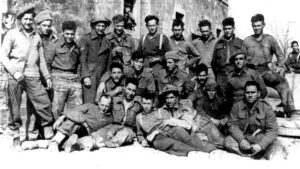
In Italy, the Jewish Brigade's flag has unfairly become a flashpoint in today’s battles over Zionism and anti-fascism, writes Dr. Ginaluca Fantoni.